Quick Answer
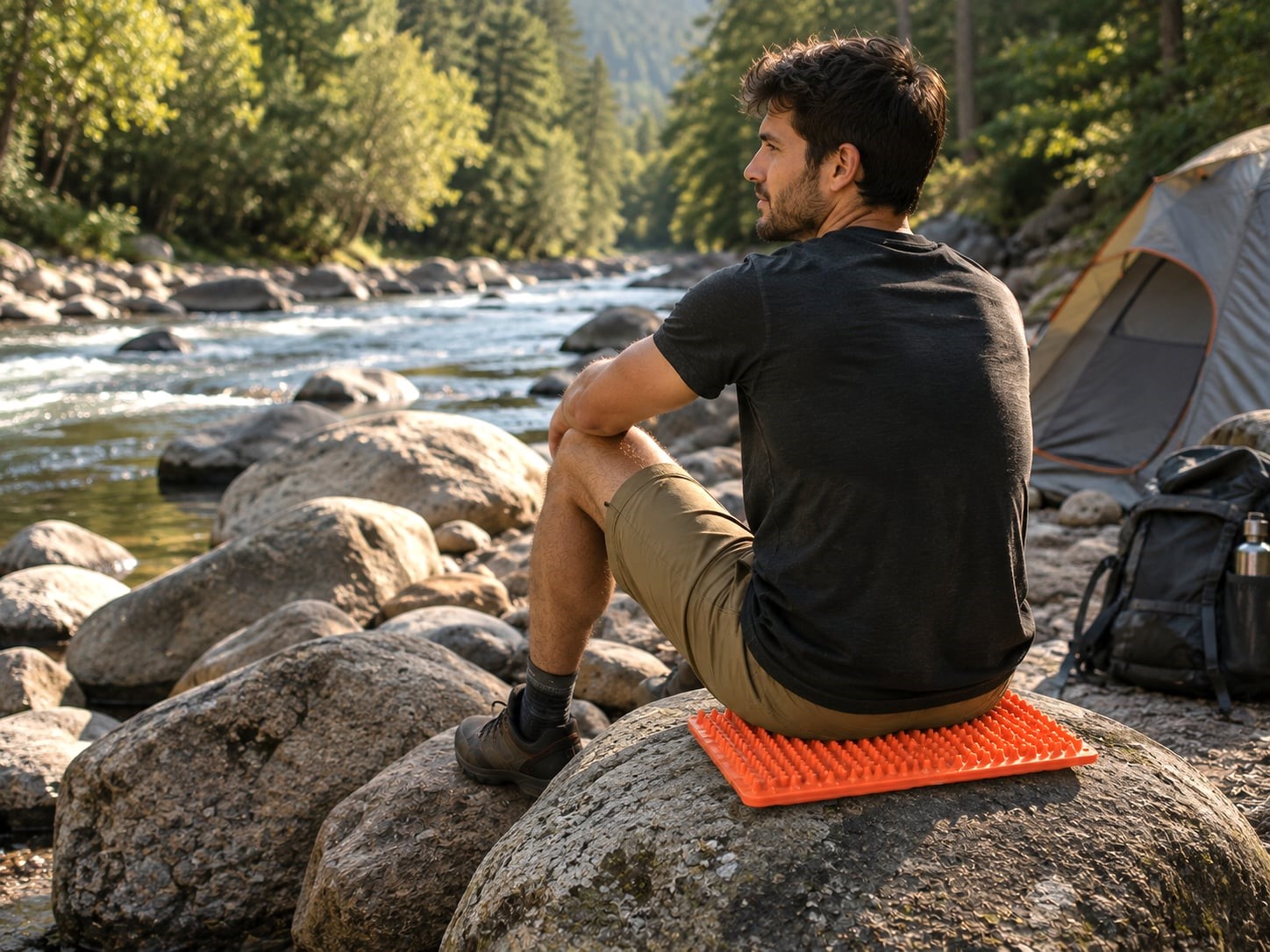
The best hiking sit pad is lightweight, durable, waterproof, comfortable, and versatile enough to use throughout your adventure. While traditional foam sit pads simply provide a place to sit, the SP1KE™ Trail Pad combines closed-cell waterproof foam with patented Tips & Mesh™ technology to create a comfortable trail companion that can be used for sitting, kneeling, changing footwear, cooking, relaxing, protecting gear, and much more.
Every Experienced Hiker Has a Few Pieces of Gear They Never Leave Behind
Ask experienced hikers what they always carry, and you’ll hear familiar answers.
A good backpack.
Reliable hiking boots.
Water.
Snacks.
A first aid kit.
Many will also tell you they never hike without a trail sit pad.
At first glance, a sit pad seems simple.
It is lightweight.
Portable.
Easy to carry.
But once you’ve used one on a long hike, it quickly becomes one of the most useful pieces of gear in your pack.
A trail sit pad gives you a clean, dry, comfortable place to rest almost anywhere.
It keeps you off cold rocks, wet logs, muddy ground, and uneven terrain.
It protects your clothing.
It gives your knees a break while setting up camp.
It even creates a clean place to stand while changing socks or boots.
The more you hike, the more uses you discover.
That is why experienced hikers rarely leave home without one.
Why Trail Breaks Matter More Than Most Hikers Realize
Many people think recovery begins after reaching camp.
In reality, recovery begins during every break along the trail.
Whether you stop for five minutes or thirty, your body starts recovering the moment you remove constant pressure from your feet.
Your muscles relax.
Your joints decompress.
Your breathing slows.
Your body prepares for the next section of trail.
A comfortable place to sit or kneel encourages you to take better breaks.
Those breaks often make the remainder of your hike more enjoyable.
The SP1KE™ Trail Pad was designed around that idea.
It is not simply something to sit on.
It becomes your recovery station wherever the trail takes you.
What Makes a Great Hiking Sit Pad?
Not every sit pad performs the same way.
Some focus almost entirely on weight.
Others focus on insulation.
Some simply provide a thin layer of foam between you and the ground.
The best hiking sit pads combine several important characteristics.
Lightweight and Easy to Carry
Every piece of hiking equipment should justify its place in your backpack.
The SP1KE™ Trail Pad measures 18 × 11 inches, is 1 inch thick, weighs approximately 210 grams, and rolls easily for storage.
It is light enough for day hikes while offering substantially more comfort than many thinner alternatives.
Waterproof
Trail conditions change quickly.
One minute you are sitting beside a sunny lake.
The next, you find yourself resting on damp logs or muddy ground.
Closed-cell materials prevent water from soaking into the pad.
Instead of absorbing moisture, they repel it.
A quick wipe is often all that is needed before packing it away.
Durable
Outdoor gear should last.
Sharp rocks.
Tree roots.
Gravel.
Repeated use.
A quality trail pad needs to withstand them all.
Durability becomes especially important for hikers who spend hundreds of hours outdoors each year.
Comfortable
Comfort is about more than softness.
The best trail pads help distribute pressure across your body.
Reducing pressure concentration helps make every break more relaxing.
Versatile
The best outdoor gear performs multiple jobs.
Experienced hikers appreciate products that solve several problems without adding unnecessary bulk.
That is one of the biggest strengths of the SP1KE™ Trail Pad.
One Pad. Fifteen Trail Uses.
Many hikers purchase a sit pad expecting to use it only during lunch.
After a few trips, they discover it becomes one of the most versatile pieces of equipment they own.
Here are just a few ways hikers use a trail pad.
✔ Sit comfortably on rocks
✔ Sit on wet logs
✔ Sit on cold ground
✔ Kneel while preparing meals
✔ Kneel while lighting a camp stove
✔ Kneel while filtering water
✔ Adjust boots and gaiters
✔ Change socks without getting dirty
✔ Stand on while changing footwear
✔ Protect expensive rain gear from mud
✔ Rest tired feet during breaks
✔ Place outside the tent entrance
✔ Protect camera equipment from rough surfaces
✔ Create a clean place to organize gear
✔ Use as a comfortable campfire seat
One lightweight pad.
Countless practical uses.
Why the SP1KE™ Trail Pad Is Different
Many hiking sit pads use simple closed-cell foam.
They provide insulation from cold ground and a modest amount of cushioning.
The SP1KE™ Trail Pad takes a different approach.
Instead of relying on a flat piece of foam, it uses Tips & Mesh technology developed by Vigurus Technologies Inc.
The design consists of hundreds of flexible tips connected through an open structural mesh.
Rather than creating one continuous flat surface, each tip responds independently to your body’s natural movement.
This creates a standing or sitting surface that continuously adapts as you shift your weight.
The result is a very different experience from traditional foam pads.
What Is Tips & Mesh Technology?
Imagine hundreds of small flexible support points working together.
As you sit or kneel, the tips gently compress.
As you move, they respond independently.
Instead of pressure concentrating beneath one area of your body, the load is distributed across the entire surface.
This dynamic response helps keep your body comfortably supported without the feeling of “bottoming out.”
Unlike rigid molded surfaces, the flexible tips continue responding throughout your break.
Even small movements create subtle adjustments.
This makes the SP1KE™ Trail Pad feel active rather than passive.
Gentle Sensory Stimulation
The soles of your feet contain thousands of sensory receptors.
Your knees and lower legs also respond to changes in surface texture.
The flexible tips provide gentle tactile feedback whenever they contact your body.
This constant but subtle sensory stimulation encourages natural movement rather than remaining completely still.
Many hikers naturally shift their weight while resting.
The Tips & Mesh™ structure complements those movements by continuously adapting beneath you.
Instead of creating one fixed pressure point, the support changes with your position.
More Than Just a Place to Sit
The SP1KE™ Trail Pad was designed to become part of your outdoor experience.
Whether you are taking in a mountain view, preparing lunch beside a lake, photographing wildlife, or adjusting your hiking boots before the next climb, comfort matters.
Small improvements in comfort often make long days outdoors far more enjoyable.
A simple trail break becomes an opportunity to recharge before continuing your adventure.
Trail Comfort Without Added Complexity
Outdoor gear works best when it is simple.
No inflation.
No valves.
No pumps.
No assembly.
Simply unroll the SP1KE™ Trail Pad and place it wherever you need it.
When your break is over, roll it back up and continue hiking.
Its lightweight design makes it easy to carry without adding unnecessary complexity to your gear system.
Coming in Part 2
In Part 2, we’ll explore:
Why closed-cell waterproof foam is ideal for outdoor adventures
How the SP1KE™ Trail Pad stays clean, odor-free, and ready for every hike
Why it works for campers, anglers, birders, photographers, and RV enthusiasts