Editor’s Note:
This article was originally written by Brian Werner and published on his Substack. Visit Brian Werner’s Substack here.
This Substack article explores the clinical necessity of sensory substitution for patients with Bilateral Vestibular Hypofunction (BVH), specifically focusing on how SP1KE™ technology facilitates somatocentric engagement during daily functional activities.
Introduction
Mechanotransduction is the physiological process by which cells convert mechanical stimuli into biochemical signals to facilitate tissue remodeling and maintain homeostatic integrity. For patients with Bilateral Vestibular Hypofunction (BVH), this process is essential for sensory substitution—the neurological reorganization where the brain prioritizes somatosensory and visual cues to compensate for lost vestibular input. By utilizing a three-dimensional load distribution, SP1KE™ technology coordinates with the body’s natural systems to optimize the somatocentric interface, providing the high-fidelity signaling required for successful compensation.

Why Is Somatocentric Engagement Crucial for Sensory Substitution?
When the vestibular system fails bilaterally, the central nervous system must re-weight its sensory hierarchy. Patients often fall into a maladaptive state of visual dependency because their somatosensory input from traditional, flat surfaces is too static to provide reliable orientation data. To achieve true sensory substitution, the patient must engage a ‘strong somatosensory component’ that provides dynamic, functional feedback rather than a simple ‘grounding’ sensation.

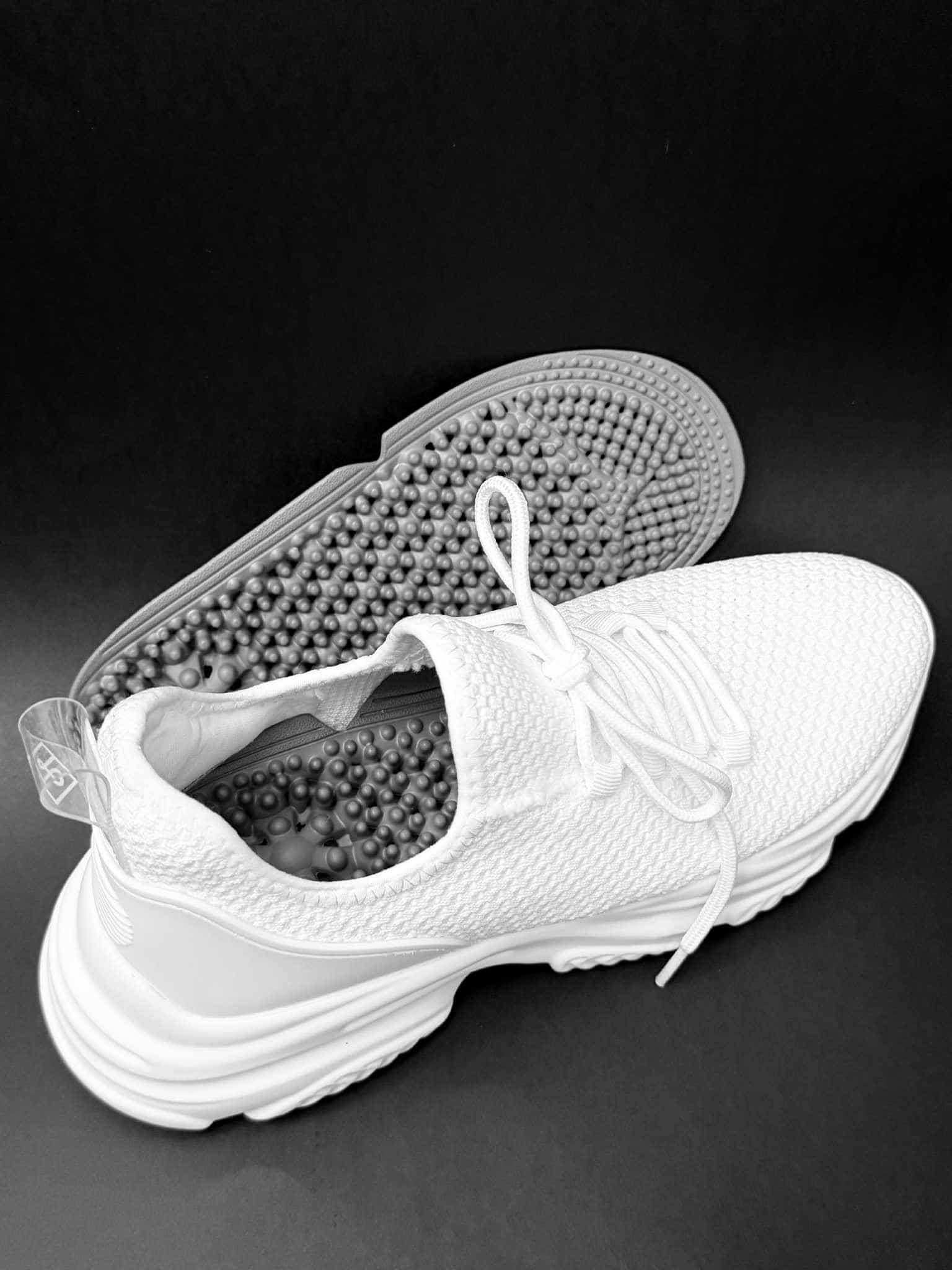
SP1KE™ uses a patented design featuring interactive geometric nodes that mimic the body’s fibrillar protein meshwork. This structure creates a state of ‘pre-stress,’ allowing the system to remain mechanically stable while adapting to tension, compression, and shear. For the BVH patient, this means the surface is constantly ‘talking’ to the plantigrade surface of the feet, providing the somatocentric cues necessary to substitute for missing vestibular signals during micro-movements and postural sways.

How Do SP1KE™ Mats Facilitate Sensory Integration in Daily Life?
The transition from the clinic to the home environment is often where BVH patients struggle most. Integrating a dynamic somatosensory interface into daily life is crucial for reinforcing new sensory pathways. Utilizing SP1KE™ mats during routine functional activities ensures the somatocentric system remains the primary driver of balance.
- Functional Activity Support: Placing SP1KE™ mats in high-use areas—such as in front of the kitchen sink for doing dishes or at a standing desk—forces the brain to integrate somatosensory data during ‘ego-centric’ and ‘exocentric’ flow. The adjustable tips provide constant feedback, helping offset the ‘jolt of optics’ that often triggers the alarm system during daily tasks.
- Reinforcing the Home Exercise Program: Incorporating these mats into daily exercises ensures that the patient is not just desensitizing to movement but actively compensating for vestibular loss with high-quality somatocentric input. The nodes provide a clear map of the patient’s center of mass, allowing them to maintain stability without over-relying on visual fixations.
- Optimizing the Microenvironment: By stimulating mechanoreceptors in the feet, the technology creates a more conducive environment for neural signaling. This helps the patient ‘feel’ their environment in three dimensions, a fundamental requirement of the Werner Sensory Integration Method.
Why Is This Different From Traditional Standing Surfaces?
Traditional anti-fatigue mats or flat flooring often lead to ‘sensory tuning out.’ They do not provide the reactive feedback necessary to drive neuroplasticity in the vestibular-deficient patient. SP1KE™ technology, developed by Vigurus Technologies, serves as a suspension system for the body, actively encouraging sensory engagement.
- Claim #1: Dynamic Feedback: SP1KE™ dynamically adjusts to load changes, ensuring that the somatocentric system receives a continuous stream of data. This prevents the ‘static anchoring’ that often keeps BVH patients in a state of kinesiophobia.
- Claim #2: Eliminating Shearing: The design aid body control by eliminating the sliding that often disrupts postural stability. This is essential when a patient is performing reaching tasks or turning their head while standing.
- Claim #3: Stimulated Signaling: The tips gently massage the body to stimulate blood flow and reduce pressure on nerve endings, ensuring that the peripheral data reaching the brain is clear and uninterrupted.
By integrating this technology into both the exercise program and daily functional life, we create a robust environment for sensory substitution. We move the patient beyond mere survival and toward a functional, integrated recovery.
Explore SP1KE™ Technology at Vigurus.com
About the Author:
Brian Werner is a physical therapist and educator specializing in balance and vestibular rehabilitation. Read more of his work here: