Not all foot pain is the same.
Your arch type plays a major role.
Some people have flat feet.
Others have high arches.
Both can cause discomfort.
Both can benefit from proper support.
This guide explains the differences clearly.
It also explains how insoles help manage pressure for each type.
What Is a Foot Arch?
The arch is the curved structure along the inside of your foot.
It helps:
- Absorb shock
- Distribute weight
- Adapt to surfaces
Arch height varies from person to person.
Most people fall into three categories:
- Neutral arch
- Flat feet
- High arches
What Are Flat Feet?
Flat feet occur when the arch is low or collapsed.
When standing, most of the sole touches the ground.
Flat feet are also called fallen arches.
According to the Cleveland Clinic, flat feet are common and often painless.
Pain occurs when pressure becomes uneven.
How Flat Feet Affect Movement
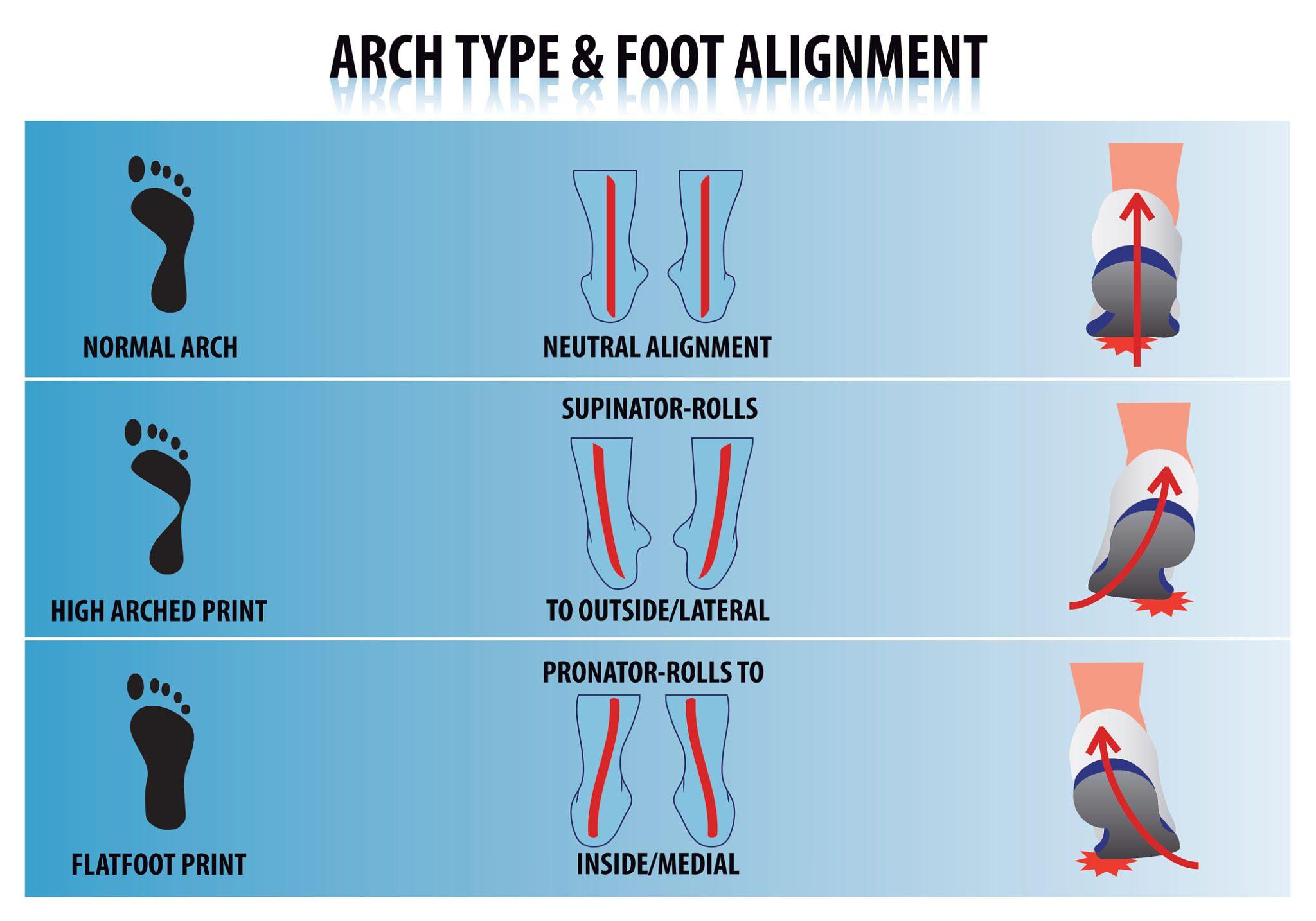
Flat feet often cause overpronation.
Overpronation means the foot rolls inward.
This shifts weight toward the inner side.
Pressure increases under:
- Heel
- Arch
- Inner forefoot
Common Symptoms of Flat Feet
Flat feet may cause:
- Arch strain
- Heel soreness
- Ankle fatigue
- Knee discomfort
Symptoms often worsen during long standing.
For more insight, read:
Standing All Day With Foot Pain
What Are High Arches?
High arches are the opposite of flat feet.
The arch sits higher than average.
When standing, less of the midfoot touches the ground.
This reduces natural shock absorption.
How High Arches Affect Movement
High arches often cause supination.
Supination means the foot rolls outward.
This shifts pressure toward the outer edge.
Shock absorption decreases.
Pressure concentrates under:
- Heel
- Ball of the foot
Common Symptoms of High Arches
High arches may cause:
- Heel pain
- Forefoot discomfort
- Ankle instability
- Stress fractures in severe cases
Fatigue often develops quickly.
Flat Feet vs High Arches: Key Differences
| Feature | Flat Feet | High Arches |
| Arch height | Low | High |
| Common motion | Overpronation | Supination |
| Pressure focus | Inner foot | Outer foot |
| Shock absorption | Reduced structure | Reduced flexibility |
Both conditions affect pressure distribution.
Why Both Arch Types Can Cause Pain
Pain is rarely caused by arch shape alone.
It is usually caused by pressure imbalance.
When pressure concentrates in one area, tissue fatigue follows.
Over time, discomfort develops.
Flat Feet and Standing Jobs
Flat feet often struggle during long standing shifts.
Overpronation increases fatigue.
Hard floors amplify pressure.
Proper support becomes essential.
High Arches and Impact
High arches absorb shock poorly.
This increases impact during walking.
Pressure builds under the heel and forefoot.
Fatigue develops quickly.
How Insoles Help Flat Feet
Flat feet benefit from:
- Arch support
- Pressure redistribution
- Stability
Support should prevent excessive inward rolling.
Soft foam often collapses too quickly.
Structural support performs better.
How Insoles Help High Arches
High arches benefit from:
- Shock absorption
- Pressure spreading
- Balanced cushioning
The goal is to reduce peak pressure.
Support must avoid rigidity.
What Makes an Insole Effective for Both Types?
An effective insole must:
- Maintain structure under load
- Adapt to body weight
- Redistribute pressure laterally
It should not collapse.
It should not feel overly rigid.
Structural Insoles vs Foam Insoles
Foam insoles:
- Feel soft
- Compress quickly
- Lose shape
Structural insoles:
- Maintain form
- Spread load
- Resist compression
Durability matters for both arch types.
How SP1KE™ Insoles Support Different Arch Types
SP1KE™ insoles use a dynamic Tips & Mesh structure.
They are developed by Vigurus Technologies Inc..
Each tip narrows at the top and widens toward the base.
This creates progressive resistance.
As load increases, support increases.
For flat feet, this may help reduce inward pressure.
For high arches, it may help spread impact force.
Flat Feet vs High Arches and Heel Pain
Both conditions may cause heel discomfort.
Flat feet increase inward load.
High arches increase vertical impact.
Pressure redistribution may reduce strain.
Flat Feet vs High Arches and Knee Alignment
Overpronation can shift knee tracking inward.
Supination can increase outer knee stress.
Insoles may support better alignment under load.
When to Consider Insoles
Consider insoles if you experience:
- Persistent fatigue
- Arch strain
- Heel soreness
- Discomfort after work
Support should match your arch type.
When to Seek Professional Advice
Seek medical guidance if you experience:
- Severe swelling
- Sudden instability
- Sharp persistent pain
Insoles support comfort but do not replace diagnosis.
Frequently Asked Questions
Are flat feet worse than high arches?
Neither is worse. Both can cause discomfort if pressure is uneven.
Do high arches need more cushioning?
They often benefit from improved shock absorption.
Can insoles fix arch shape?
No. They help manage pressure.
Should flat feet use rigid orthotics?
It depends on comfort and activity level.
Can arch type change over time?
Yes. Aging and injury may alter arch height.
Final Thoughts
Flat feet and high arches are different.
But both can lead to pressure imbalance.
Managing load is often more important than changing structure.
Understanding how pressure moves through your feet is a meaningful step toward daily comfort.