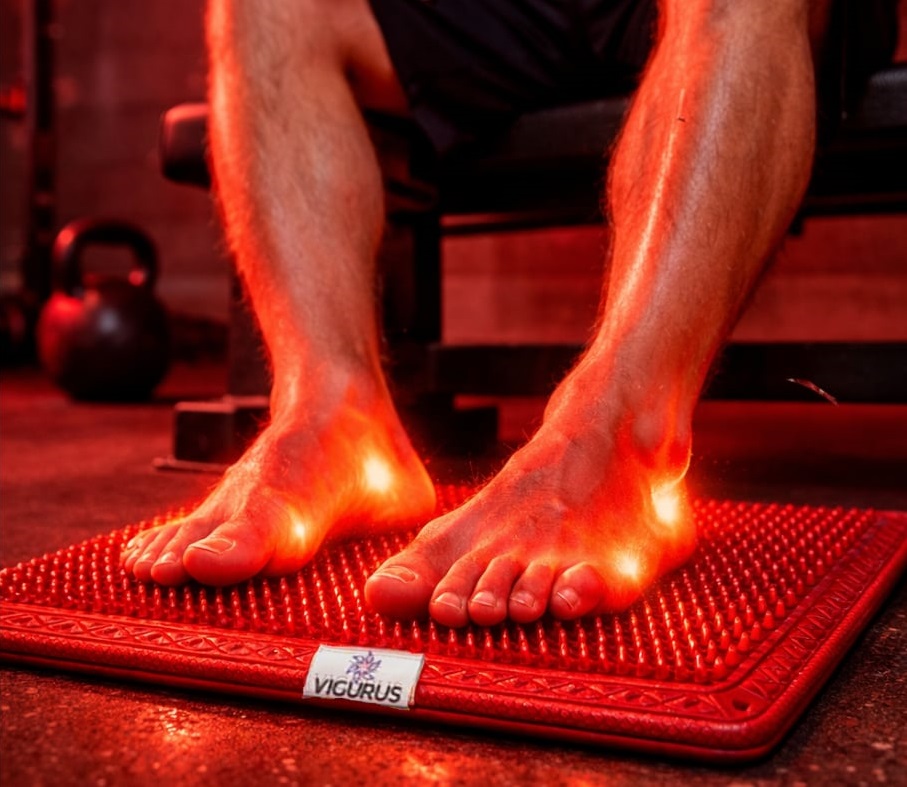
Red light therapy is widely used in 2026.
Acupressure mats are also popular.
Many people now combine the two.
But not all mats are designed the same way.
And not all mats work well with red light therapy.
This guide explains how red light therapy and acupressure surfaces work together.
It also explains why structure matters.
Why People Combine Red Light Therapy and Acupressure Mats
Red light therapy may support cellular processes.
Acupressure mats stimulate surface tissue mechanically.
When used together, they may support:
- Circulation
- Relaxation
- Recovery
- Sensory activation
However, surface design plays an important role.
What Is an Acupressure Mat?
An acupressure mat is a surface covered with raised points.
These points apply controlled pressure to the skin.
Traditional mats use rigid plastic spikes.
Some use softer molded shapes.
The goal is to stimulate tissue and encourage blood flow.
How Red Light Therapy Works
Red light therapy uses specific wavelengths between 600 and 900 nanometers.
These wavelengths penetrate skin.
They may stimulate mitochondrial activity.
Research continues in 2026.
Why Surface Design Matters With Light Therapy
Red light penetrates tissue.
But contact between skin and surface affects how light is delivered.
If the surface blocks light, penetration reduces.
If the surface collapses, pressure concentrates.
Surface structure must balance:
- Contact
- Airflow
- Light exposure
- Pressure distribution
The Problem With Traditional Acupressure Mats
Traditional spike mats often use hard, fixed plastic points.
These spikes:
- Do not adapt to body weight
- Can create sharp pressure
- May feel uncomfortable for some users
They also do not move with the body.
Rigid spikes concentrate pressure instead of redistributing it.
Why Fixed Spikes May Not Support Dynamic Circulation
The body constantly makes micro-movements.
Breathing and small shifts matter.
Rigid spikes stay fixed.
They do not adapt to subtle movement.
This limits dynamic stimulation.
Introducing a Structural Approach: SP1KE™ Mat
The SP1KE™ mat uses a different design.
It is developed by Vigurus Technologies Inc..
Instead of rigid spikes, it uses a Tips & Mesh structure.
This structure:
- Responds to load
- Maintains airflow
- Redistributes pressure
It does not collapse under weight.
How SP1KE™ Tips Differ From Traditional Spikes
SP1KE™ tips are smaller at the top.
They widen toward the base.
As pressure increases, resistance increases.
This creates progressive support.
Rigid spikes do not adapt this way.
Why Progressive Resistance Matters
Light users engage fewer tips.
Heavier users engage more structure.
This prevents bottoming out.
It also reduces sharp pressure points.
Combining Red Light Therapy With the SP1KE™ Mat
Red light therapy may support tissue recovery.
The SP1KE™ mat supports mechanical stimulation.
Together, they address both:
- Cellular activity
- Pressure distribution
This combination may support circulation and comfort.
Airflow and Light Penetration
The SP1KE™ mat maintains open grid spacing.
This allows airflow between tips.
Airflow reduces heat buildup.
It also allows light to reach skin more evenly.
Rigid mats often trap heat.
Circulation and Micro-Stimulation
Micro-movement supports circulation.
The SP1KE™ mat responds to subtle shifts.
Tips disengage and reengage slightly.
This dynamic contact supports blood flow.
Red light therapy may complement this process.
Red Light Therapy and Mechanical Stress
Light therapy may influence inflammation.
It does not reduce pressure from standing or lying.
Mechanical stress must also be managed.
The SP1KE™ mat focuses on pressure redistribution.
Who Might Benefit From This Combination
People often use this combination for:
- Muscle recovery
- Lower back tension
- Foot fatigue
- Post-exercise relaxation
Each person’s experience varies.
Using the SP1KE™ Mat Safely With Red Light Therapy
Use according to device guidelines.
Do not exceed recommended light exposure.
Start with short sessions.
Gradually increase duration as tolerated.
Red Light Therapy Alone vs Combined Use
Red light therapy alone may support recovery.
The SP1KE™ mat alone may support circulation and pressure redistribution.
Together, they may provide complementary support.
One does not replace the other.
Why Structure Outperforms Padding
Padding compresses under weight.
Compression concentrates pressure.
Structure maintains shape.
Maintained shape supports redistribution.
This matters for comfort.
Understanding the Bigger Picture
For a complete understanding of red light therapy in 2026, read:
Everything You Need to Know About Red Light Therapy in 2026
To understand pressure and support in more detail:
The Complete Guide to Foot-Related Pain and Insoles
Further Reading