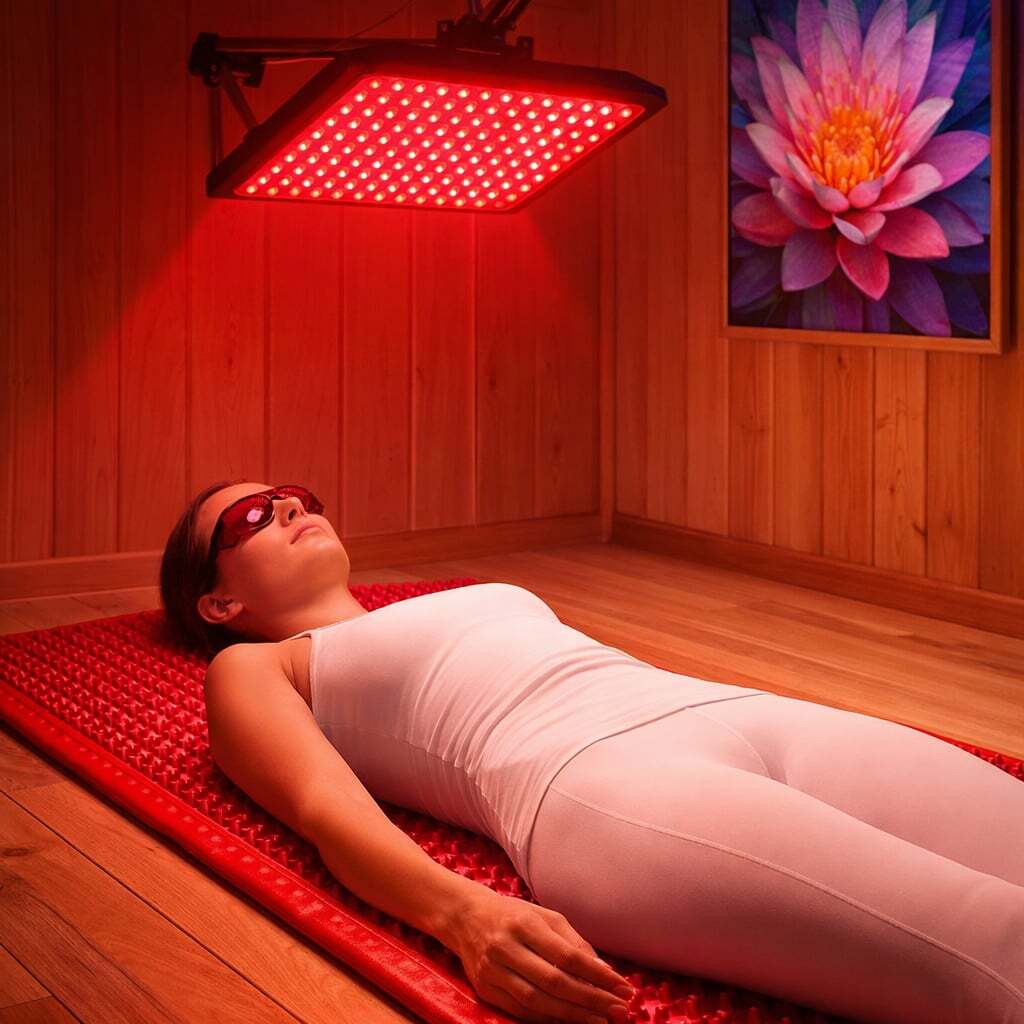
Red light therapy is everywhere in 2026.
Yet most people still do not understand how it works.
Devices are marketed for skin, recovery, pain, and energy.
Some claims are realistic. Others are exaggerated.
This guide explains red light therapy clearly and calmly.
No hype. No miracle claims.
Just what the science shows today.
What Is Red Light Therapy?
Red light therapy uses specific wavelengths of visible red and near-infrared light.
These wavelengths are typically between 600 and 900 nanometers.
The light penetrates skin and underlying tissue.
It interacts with cells in a way that may support natural biological processes.
Red light therapy is also called:
- Low-level light therapy (LLLT)
- Photobiomodulation
- Cold laser therapy
The therapy does not use ultraviolet light.
It does not tan or burn skin when used correctly.
How Red Light Therapy Works
Cells contain structures called mitochondria.
Mitochondria produce energy for the cell.
This energy is called ATP.
Some research suggests red and near-infrared light may stimulate mitochondrial activity.
When mitochondria function efficiently, cells may repair and recover more effectively.
This process is called photobiomodulation.
Research is ongoing.
The Science Behind Red Light Therapy in 2026
By 2026, red light therapy is widely studied but still evolving.
There is moderate evidence supporting its use for:
- Skin health
- Mild joint discomfort
- Muscle recovery
- Wound healing
There is less strong evidence for:
- Weight loss
- Hormonal regulation
- Systemic disease treatment
It is important to separate established findings from marketing claims.
Red vs Near-Infrared Light: What Is the Difference?
Red light ranges from 600 to 700 nanometers.
It primarily affects surface tissues.
Near-infrared light ranges from 700 to 900 nanometers.
It penetrates deeper into muscles and joints.
Many devices combine both wavelengths.
This allows broader tissue exposure.
Common Uses of Red Light Therapy in 2026
Red light therapy is used in homes, clinics, and wellness centers.
Common applications include:
- Skin rejuvenation
- Muscle recovery
- Joint comfort
- Post-exercise recovery
- Circulation support
Each use depends on proper wavelength and exposure time.
Red Light Therapy for Skin Health
Skin use is one of the most studied applications.
Some evidence suggests red light may:
- Support collagen production
- Improve skin tone
- Reduce mild inflammation
- Support wound healing
Results vary by individual.
Red Light Therapy for Muscle Recovery
Athletes increasingly use red light therapy.
Some studies show it may:
- Reduce delayed muscle soreness
- Support circulation
- Assist recovery after exercise
Recovery benefits appear modest but promising.
Red light therapy is not a replacement for rest or conditioning.
Red Light Therapy for Joint Discomfort
Joint discomfort often involves inflammation.
Some evidence suggests red and near-infrared light may help reduce mild inflammatory responses.
This may support comfort in knees, shoulders, and lower back.
It is not a cure for arthritis.
Red Light Therapy and Circulation
Light exposure may influence nitric oxide release.
Nitric oxide supports blood vessel dilation.
Improved circulation may support healing.
Effects are typically localized to treated areas.
What Red Light Therapy Does Not Do
It does not:
- Cure chronic disease
- Replace medical treatment
- Instantly remove pain
- Melt fat
It is a supportive modality, not a miracle tool.
Safety Considerations in 2026
Red light therapy is considered low risk when used correctly.
Most devices are non-thermal.
They do not heat tissue significantly.
Safety guidelines include:
- Avoid direct eye exposure
- Follow manufacturer instructions
- Do not overuse devices
Consult a healthcare professional if unsure.
How Often Should Red Light Therapy Be Used?
Frequency depends on the device and goal.
Typical use ranges from:
- 3–5 times per week
- 10–20 minutes per session
More is not always better.
Consistency matters more than intensity.
Home Devices vs Clinical Devices
Home devices are widely available in 2026.
Clinical devices often offer:
- Higher intensity
- More precise wavelength targeting
- Professional oversight
Home devices are convenient.
Results may take longer.
Red Light Therapy and Chronic Pain
Chronic pain often involves pressure, inflammation, and tissue overload.
Red light therapy may support inflammation modulation.
It does not change mechanical load patterns.
Mechanical stress must also be addressed.
The Role of Mechanical Stress in Pain
Many pain conditions involve pressure imbalance.
Foot pain, for example, is often caused by uneven load distribution.
Reducing inflammation helps.
Managing pressure is equally important.
Why Surface Support Still Matters
If pain is caused by overload, reducing inflammation alone may not solve the issue.
Support surfaces that redistribute pressure reduce mechanical stress.
This supports longer-term comfort.
Where Support Surfaces Fit Into Recovery
Recovery often requires multiple approaches:
- Movement modification
- Inflammation management
- Pressure redistribution
Each plays a different role.
How SP1KE™ Insoles Address Mechanical Load
SP1KE™ insoles focus on pressure redistribution.
They are developed by Vigurus Technologies Inc..
They use a dynamic Tips & Mesh structure.
This structure redirects pressure laterally.
It helps reduce peak stress under the heel and forefoot.
Red Light Therapy vs Mechanical Support
Red light therapy may support tissue recovery.
Mechanical support reduces ongoing stress.
One addresses biology.
The other addresses physics.
Both may play complementary roles.
When Red Light Therapy May Be Helpful
Red light therapy may support:
- Post-exercise recovery
- Mild joint discomfort
- Skin rejuvenation
It works best as part of a broader strategy.
When Mechanical Support Is Essential
If pain worsens during standing or walking, pressure management becomes critical.
Support surfaces like insoles help redistribute load.
This reduces repeated mechanical strain.
Learn more about support design
Combining Light Therapy and Support
Some people use red light therapy at home.
They also use supportive insoles during the day.
This approach addresses both inflammation and load.
Results depend on consistency and realistic expectations.
The Future of Red Light Therapy Beyond 2026
Research continues.
Future areas of study include:
- Neurological applications
- Deeper tissue repair
- Metabolic effects
Many questions remain.
Caution and curiosity should coexist.
Frequently Asked Questions (FAQ)
Is red light therapy safe?
Yes, when used correctly and not directed into the eyes.
Does red light therapy work instantly?
No. Effects are gradual and vary by person.
Can red light therapy cure chronic pain?
No. It may support comfort but does not cure disease.
How long before results appear?
Some people notice changes within weeks.