Concrete floors are unforgiving.
They do not absorb impact.
If you stand or walk on concrete all day, pressure builds fast.
Fatigue often starts in your heels.
By the end of a shift, your feet may feel heavy and sore.
The right insoles can help manage that pressure.
This guide explains what happens when you stand on concrete.
It also explains which insoles work best in 2026.
Why Concrete Floors Cause Foot Pain
Concrete is rigid.
It does not compress under body weight.
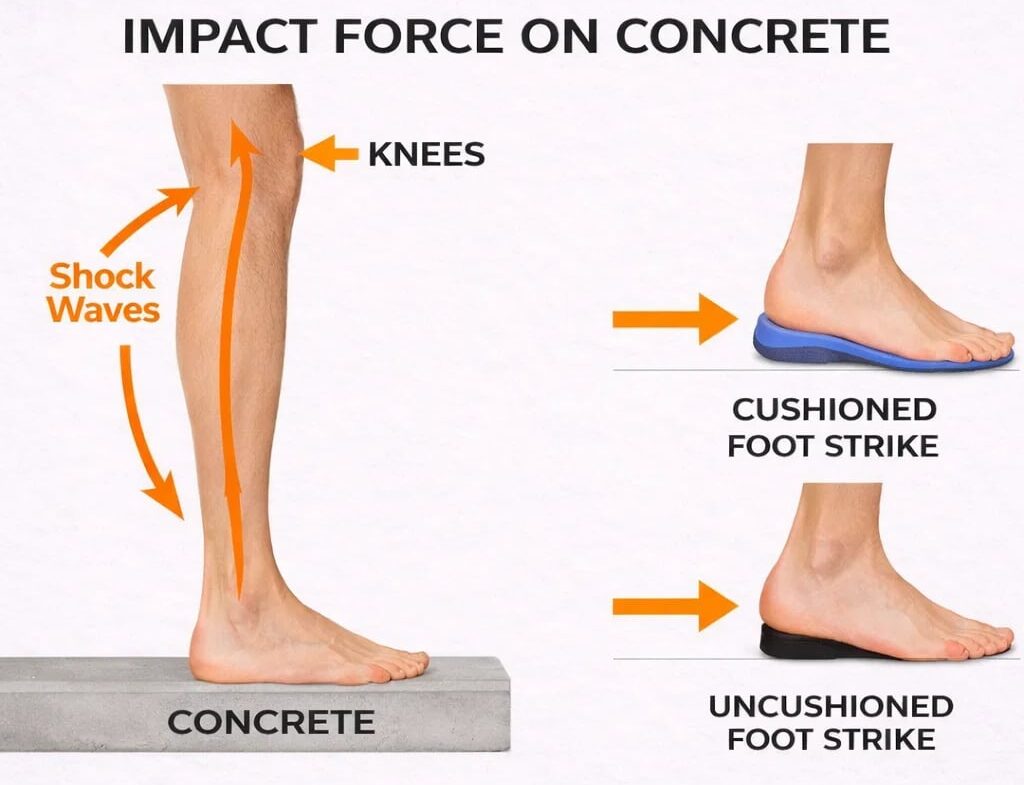
When your foot strikes concrete:
- Shock travels upward
- Tissue absorbs impact
- Pressure concentrates under the heel
Unlike grass or rubber, concrete returns all force.
Over time, repeated impact leads to fatigue.
According to the Cleveland Clinic, repeated mechanical stress can contribute to foot discomfort.
Hard surfaces amplify that stress.
Standing vs Walking on Concrete
Walking shifts pressure.
Standing keeps pressure fixed.
When you stand still:
- Muscles stay engaged
- Circulation slows
- Fatigue builds
This is called static load.
To understand this better, read:
Standing All Day With Foot Pain
Static load is often more exhausting than walking.
Common Problems From Concrete Floors
Standing on concrete may contribute to:
- Heel pain
- Arch strain
- Forefoot soreness
- Knee fatigue
- Lower back discomfort
Pain often starts subtly.
Without support, it increases over time.
What to Look for in Insoles for Concrete Floors
Not all insoles work well on hard surfaces.
Concrete requires durability and structure.
Shock Absorption That Lasts
Soft foam may feel comfortable at first.
But it compresses quickly.
Durability matters.
Pressure Redistribution
Impact must spread across the foot.
Peak pressure under the heel should decrease.
Support must resist collapse.
Structural Stability
Concrete floors increase load.
Insoles must maintain shape under body weight.
If structure fails, fatigue increases.
Breathability
Long shifts create heat.
Airflow improves comfort.
Open structures help reduce moisture buildup.
Best Insoles for Concrete Floors in 2026
1️⃣ Vigurus SP1KE™ Insoles
SP1KE™ insoles focus on structural load management.
They are developed by Vigurus Technologies Inc..
Unlike foam or gel, they use a dynamic Tips & Mesh structure.
This structure:
- Maintains shape under load
- Redistributes pressure laterally
- Prevents bottoming out
Each tip narrows at the top and widens toward the base.
As weight increases, resistance increases.
This is called progressive resistance.
Why SP1KE™ Works on Concrete
Concrete requires durable support.
SP1KE™ does not collapse.
The open grid design improves airflow.
This may help reduce fatigue during long shifts.
Learn more here →
Product Page
SP1KE™ focuses on mechanical stress reduction.
2️⃣ High-Density Foam Insoles
High-density foam offers cushioning.
It may reduce initial impact.
However:
- Foam compresses over time
- Shape may flatten
- Support decreases
Replacement frequency may increase.
3️⃣ Gel Insoles
Gel absorbs shock.
It feels soft initially.
However, gel spreads under load.
This may concentrate pressure elsewhere.
Gel may work for light use.
For heavy shifts, durability varies.
Why Structure Matters More Than Softness
Soft insoles feel comfortable briefly.
But softness alone does not manage load.
Structure maintains pressure distribution.
Concrete floors demand resistance to compression.
Insoles vs Anti-Fatigue Mats
Many workplaces use anti-fatigue mats.
Mats reduce surface impact.
Insoles manage pressure inside the shoe.
Both serve different purposes.
Layering both may improve comfort.
Work Boots and Concrete Floors
Work boots add weight.
Heavy footwear increases force during each step.
Insoles must support additional load.
Structural support helps prevent bottoming out.
Concrete Floors and Heel Pain
Heel pain is common on concrete.
The heel absorbs initial impact.
Repeated compression irritates tissue.
Redistributing load reduces peak pressure.
For deeper understanding, read:
Our Complete Guide to Foot Pain
Understanding pressure helps clarify heel discomfort.
Long-Term Effects of Hard Surfaces
Chronic exposure to hard floors may increase:
- Plantar stress
- Tendon fatigue
- Muscle strain
Proper support may reduce repetitive strain.
How Often Should You Replace Insoles?
Replacement depends on:
- Body weight
- Shift length
- Material durability
Foam may need replacement sooner.
Structural insoles typically last longer.
Inspect insoles regularly.
When to Consider Insoles for Concrete Work
Consider insoles if you experience:
- Heel soreness after shifts
- Arch fatigue
- Knee discomfort
- Lower back tightness
Support should feel stable but not rigid.
When to Seek Medical Advice
Seek professional care if you experience:
- Persistent swelling
- Sharp pain
- Numbness
- Sudden instability
Insoles are support tools, not medical treatment.
Final Thoughts
Concrete floors increase mechanical stress.
The best insoles for concrete floors in 2026 focus on durability, structure, and pressure redistribution.
Understanding how impact travels through your feet is a practical first step toward reducing fatigue.
Frequently Asked Questions
What are the best insoles for concrete floors?
Insoles that maintain structure and redistribute pressure.
Are soft insoles enough for concrete?
Soft foam may compress quickly under heavy use.
Do anti-fatigue mats replace insoles?
No. They serve different functions.
Can insoles reduce heel pain?
They may reduce repeated impact stress.
How long do insoles last on concrete?
Durability depends on material and usage intensity.